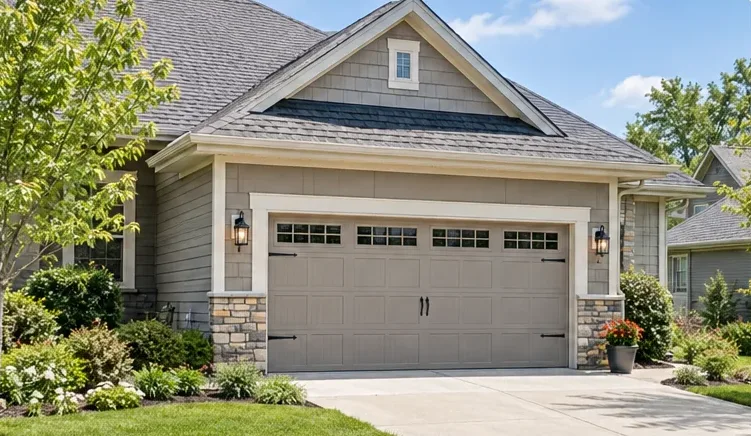
Signs a spring has broken
- A loud bang from the garage, like a firecracker, often when nobody was using the door.
- The opener hums or runs but the door won’t lift, or lifts a few inches and stops.
- A visible gap in the coil of the spring above the door.
- The door feels extremely heavy if you try to lift it by hand.
- Cables hanging loose beside the door.
Don’t keep pressing the button. Running the opener against a door with a broken spring can burn out the motor or strip the gear. Don’t pull the red emergency cord either: the door may come down hard.
Torsion vs. extension springs
Torsion springsMounted on a bar above the door. Most newer homes have them. Smoother and longer lasting.
Extension springsRun along the horizontal tracks on each side, often on older homes. They need safety cables in case one snaps.
Both types are replaced as a pair, sized to the weight of your door. A spring that is the wrong size wears out early and strains the opener, which is one of the most common reasons openers fail.
What spring repair costs
| Job | Typical price | Notes |
|---|---|---|
| Both torsion springs, one door | $150–$400 | New pair, door balanced and safety-checked |
| Extension springs, one door | $150–$300 | Includes safety cables if missing |
| Springs plus lift cables | $200–$500 | When cables are frayed or came off with the spring |
| High-cycle springs | Costs more upfront | Rated for about 25,000 cycles instead of 10,000 |
Typical Kansas City ranges, not a quote. The technician confirms the price after looking at the door and before any work begins.
How long will new springs last?
Standard springs are rated for about 10,000 cycles. One cycle is the door opening and closing once, so a household that uses the garage as its front door can use them up in four or five years. High-cycle springs cost more but can last two to three times as long. The spring life calculator shows the difference at your usage.
What happens on the visit
- The door is secured so it can’t move while the old springs are unwound.
- Both springs are measured and replaced with the right size for the door’s weight and height.
- Cables, drums, bearings and rollers are checked; you’re told about anything worn before it’s replaced.
- The door is balanced so it stays put halfway up, and the opener’s force and safety reverse are tested.